Sham Shui Po Street Adventure
Located only a few stations from JTIA, Sham Shui Po is a vibrant district known for its grassroots culture, budget-friendly shopping, and trendy cafés. Here, historic post-war architecture meets traditional crafts like leather and textiles, alongside a flourishing creative arts scene. With famous shopping streets and lively malls, it’s a perfect mix of heritage and modern energy.

Sham Shui Po Five-Street Strolling Route
Sham Shui Po is home to five iconic streets: Apliu Street, Yu Chau Street, Ki Lung Street, Tai Nan Street, and Fuk Wing Street. Each has its own specialty, from electronics and fabrics to trendy cafés and toys. Whether you follow your interests or wander leisurely through them all, you’ll discover the authentic flavors of Hong Kong’s street life. Let’s begin with a simple walking route.


First Stop: Apliu Street
(鴨寮街)
Transportation: Sham Shui Po MTR Station, Exit A2
Step out of Exit A2 and you’ll be greeted by the vibrant community spirit of Sham Shui Po—a living snapshot of old Hong Kong.
Your journey begins at Apliu Street, nestled between Nam Cheong and Kweilin Streets. Once lined with duck sheds, it transformed in the 1980s into Hong Kong’s most famous flea market. Here, bargain hunters and collectors flock to stalls brimming with electronic parts, vintage gadgets, audio gear, and quirky treasures. Known as 'Men’s Street,' it’s also a paradise for those seeking affordable watches, antique clocks, and rare coins.
Most stalls open from noon until late at night, with the street becoming a pedestrian zone from 12 pm to 9 pm daily—perfect for a leisurely stroll and treasure hunt.




Second Stop: Yu Chau Street
汝州街
Yu Chau Street runs nearly a kilometer through Sham Shui Po, from Portland Street in Prince Edward to Yen Chow Street by the Dragon Centre. Known as 'Bead Street,' it’s a paradise for DIY lovers, with shops overflowing with beads, ribbons, sewing supplies, and creative accessories. Alongside these craft havens, you’ll find traditional eateries, old shops, and fruit stalls that capture the grassroots flavor of Hong Kong.
Getting There:
Easily reached on foot from Prince Edward or Sham Shui Po MTR stations, Yu Chau Street is also served by bus routes 2X, 42, 98E, and 296P.


Yu Chau Street Heritage Landmarks
Yu Chau Street, developed in the 1920s–30s, is home to one of Sham Shui Po’s architectural gems: the tong lau at 269 & 271 Yu Chau Street. Built in the 1920s at the corner of Yu Chau and Kweilin Streets, this pre-war building is a rare curved-corner tong lau—one of only three left in Hong Kong.
Renovated in 2011, its façade was updated with brown terrazzo tiles, though traces of its past, like the old 'Yue Zhan Dried Seafood' shop, remain part of its story. Over the years, it has housed jewelry shops, arcade game centers, and now a hardware store, reflecting the district’s ever-changing grassroots economy.
For visitors, this building is more than just architecture—it’s a living witness to Sham Shui Po’s transformation from old Hong Kong to today’s vibrant community.


Yu Chau Street – Sam Tai Tsz & Pak Tai Temples
Side by side in Sham Shui Po, the Sam Tai Tsz Temple and Pak Tai Temple form a fascinating glimpse into Hong Kong’s spiritual heritage. The Sam Tai Tsz Temple, built in 1898, is the city’s only temple dedicated to Nezha, while the Pak Tai Temple, rebuilt around 1920, was funded by local fishermen.
Their origins are rooted in resilience: during the plague of 1894, Hakka stonemasons invited Nezha to Sham Shui Po to ward off disease. When the epidemic subsided, the temple was built in gratitude. Over time, the two temples became enduring landmarks, now recognized as Grade II and Grade III historic buildings.
Once seaside shrines, they now stand inland due to reclamation, yet they continue to embody the faith, history, and community spirit of Sham Shui Po.

Ki Lung Street

Third stop: Ki Lung Street
(基隆街)
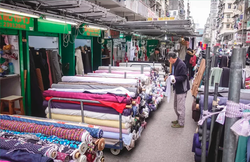
Stop 3 – Ki Lung Street: Nicknamed 'Button Street,' this vibrant stretch is a paradise for fabric lovers and DIY creators. Rows of shops overflow with cloth, buttons, zippers, and sewing supplies at bargain prices, making it a treasure trove for designers and craft enthusiasts. Beyond shopping, Ki Lung Street is a street photography hotspot, where old Hong Kong’s bustling stalls meet trendy creative spaces. Named after Keelung in Taiwan, the street reflects historic trade ties while its nostalgic tong lau and modern artistic vibe tell stories of industry, culture, and everyday life.

 |  |
|---|---|
 |
 |  |
|---|---|
 |  |
Stop 4: Tai Nan Street
(大南街)
Tai Nan Street in Sham Shui Po is a famous hotspot for film locations and street photography. The street delivers rich visual contrasts, seamlessly blending traditional open-air markets, historic leather shops, and newly emerged creative spaces.Historically a major hub for leather and garment manufacturing, the street is a living testament to Hong Kong's industrial past. Following the relocation of factories, the area gradually transformed into a fresh cultural community for art and design. While traditional leather crafts endure through local workshops, old industrial buildings have been revitalized into trendy cafes, art galleries, and independent studios. Merging nostalgia with modern creativity, Tai Nan Street preserves its industrial heritage while showcasing a vibrant hipster vibe, standing out as one of the most unique streets in the district.

Stop 5: Fuk Wing Street
(福榮街)
Fuk Wing Street, located in Sham Shui Po, is a lively street brimming with authentic Hong Kong charm. Widely celebrated as "Toy Street," its storefronts are a colorful spectacle of toys, stationery, and party decorations. Beyond its playful facade, the street is also a renowned culinary hub, packed with everything from traditional tea restaurants to local snacks. Fuk Wing Street beautifully reflects the neighborhood's daily life while embracing modern creativity, offering a delightful double experience of shopping and dining. It is not only an ideal destination for families but also a perfect gateway to experiencing true Hong Kong culture.